Book: Online Collective Action

The Penn Social Science and Policy Forum just awarded us a grant to develop the course “The Theory of Networks: How Digital Technologies Shape Collective Behavior and Why it Matters”. Sandra González-Bailón and Victor Preciado will teach this course in Spring 2015.

Abstract: We consider the sampling bias introduced in the study of online networks when collecting data through publicly available APIs (application programming interfaces). We assess differences between three samples of Twitter activity; the empirical context is given by political protests taking place in May 2012. We track online communication around these protests for the period of one month, and reconstruct the network of mentions and re-tweets according to the search and the streaming APIs, and to different filtering parameters. We find that smaller samples do not offer an accurate picture of peripheral activity; we also find that the bias is greater for the network of mentions, partly because of the higher influence of snowballing in identifying relevant nodes. We discuss the implications of this bias for the study of diffusion dynamics and political communication through social media, and advocate the need for more uniform sampling procedures to study online communication.


Sandra González-Bailón gave a talk at the Amsterdam School of Communication on “Communication Research in the Digital Era”.

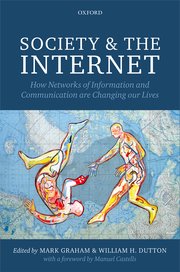
The book Society and the Internet: How Networks of Information and Communication are Changing our Lives, edited by Mark Graham and Bill Dutton, is now out. It includes the chapter “Online Social Networks and Bottom-up Politics”, by Sandra González-Bailón.